
Karl Lee and the Recipe for Magic
Big Sur in the sixties and seventies was another world. This is how an old friend of my father’s remembers Karl Lee from those years, written by Teresa Bradford-Cole. Thank you, Teresa.
To visit Karl Lee, you first had to find your way through a little wilderness.
After parking the car up on Partington, you followed an untamed mountain path toward his front door. The brush had its own ideas about where a person ought to walk. By the time you reached his rugged, somewhat shack-like homestead, you had already left a good portion of the ordinary world behind.
Here was a master jeweler, tucked into the mountains of Big Sur, making exquisite amulets and talismans.
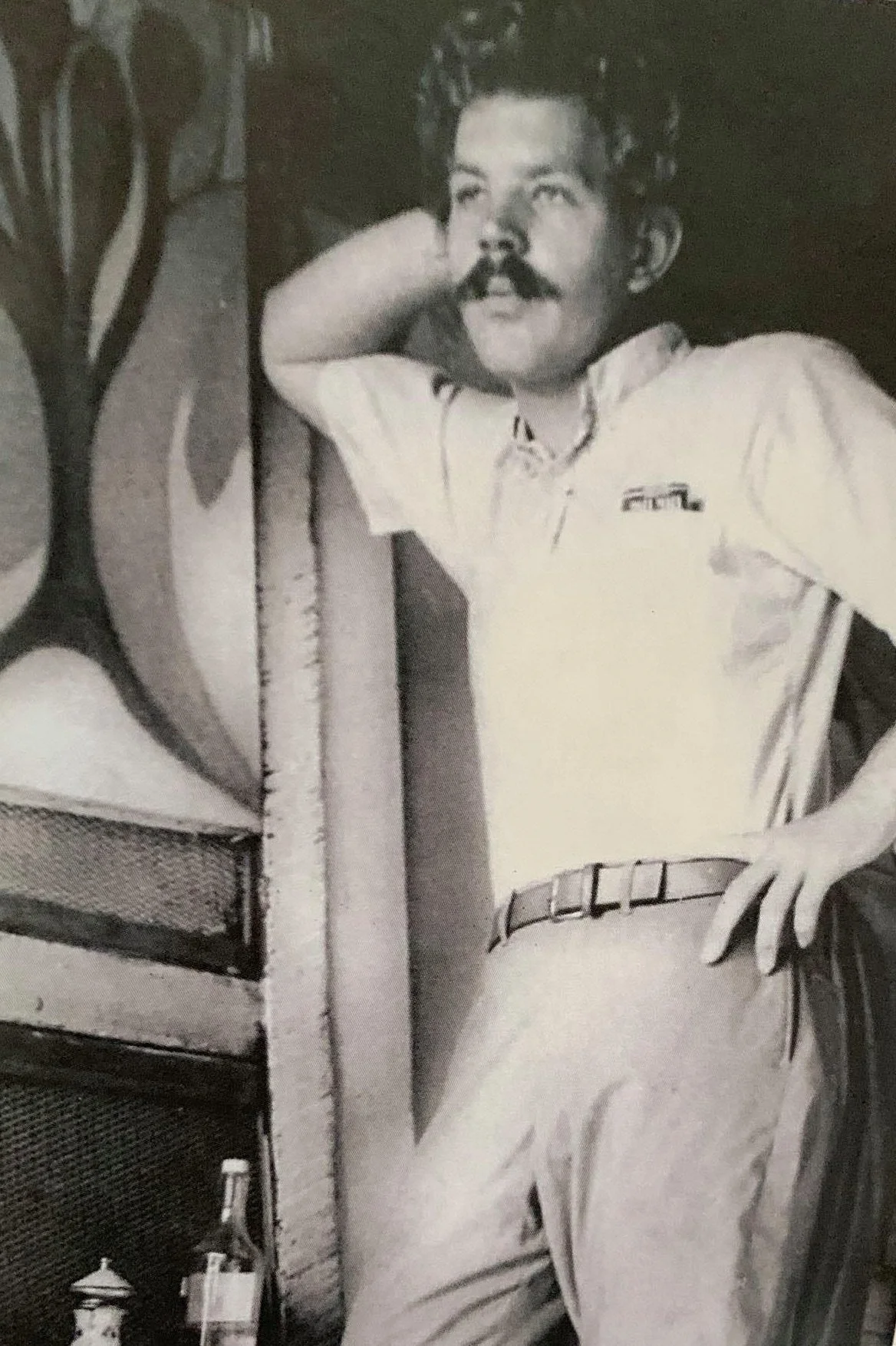
Karl Lee
Karl loved shiny stones. Color caught him. A gem held something worth looking into, something worth bringing out into the light. His work seemed to reach back toward the ancient jewelers, those patient makers who understood how to hold a stone in gold and let its beauty speak.
And yet everything that came through his hands had that unmistakable Big Sur way about it.
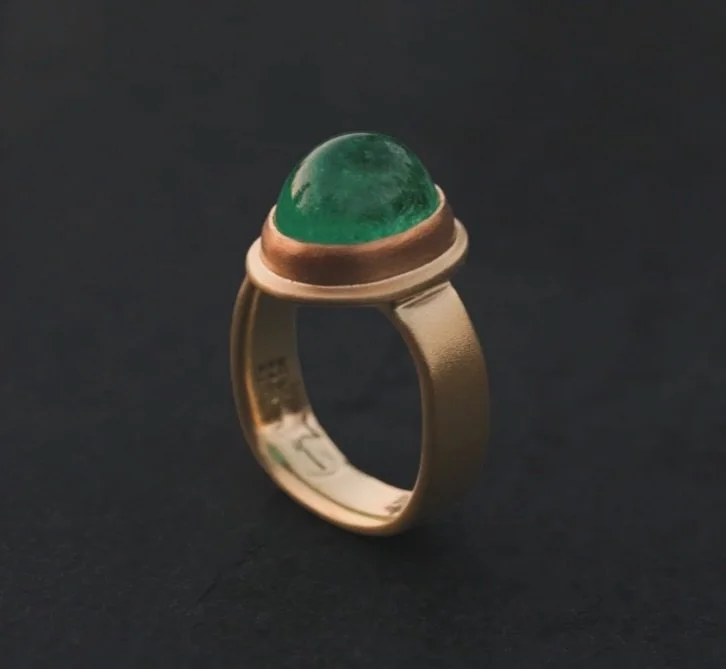
One of his rings stayed in my own collection for decades: a chartreuse-green tourmaline, bright as sunlight finding its way through a leaf. A rich gold bezel held the stone above a silver plate and band. Whether the gold was eighteen or twenty-two karat, I would have to confirm. What I remember without question is the pleasure of wearing it.
Karl understood something about fingers.
Look at your own. A finger is somewhat square, with its little changes of plane and shape. He made his rings with that understanding, giving the band a squarer structure that settled comfortably onto the hand. Such a practical bit of knowing, tucked beneath all that beauty.
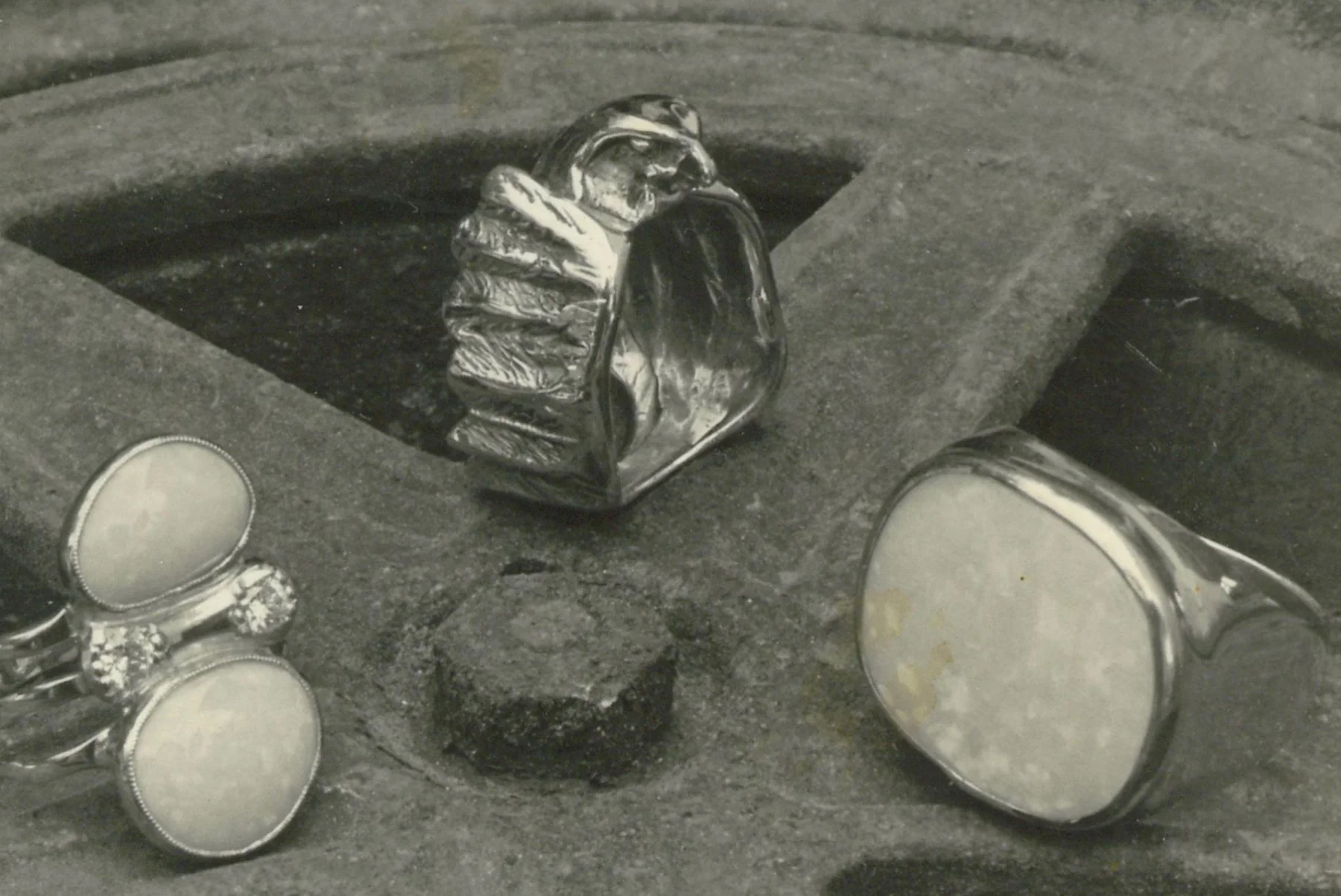
His work
People wore his pieces as jewelry, as amulets, as talismans. Some simply admired them. If you were fortunate enough to have one, you could feel the care he had worked into it. For me, that was part of the magic.
Karl himself was a wild child, in my opinion.
He wasn’t a socialite, fluttering from gathering to gathering like a butterfly or skimming through every conversation like a dragonfly. He stayed up his mountain, and the world found its way to him.
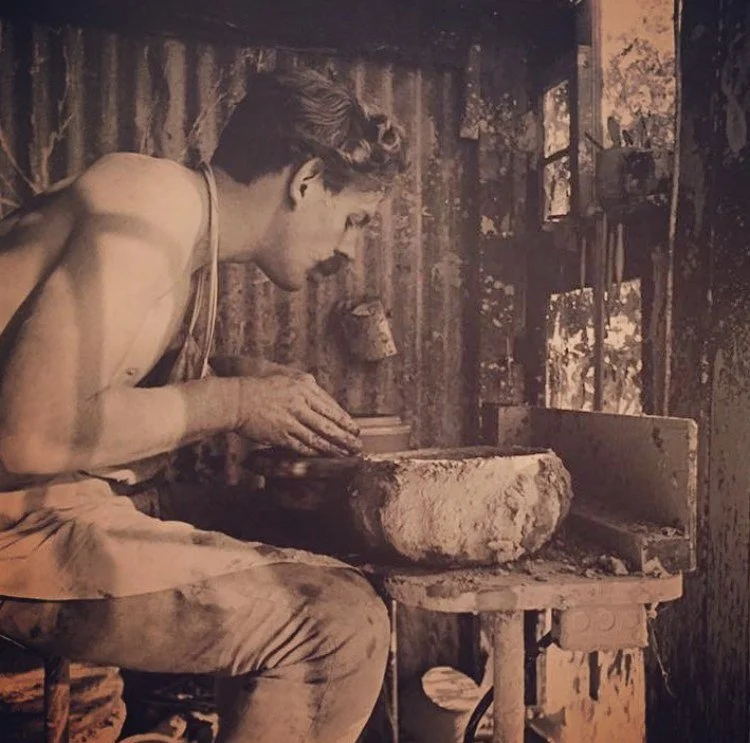
Karl Lee
Visitors came from Nepal and Tibet, New York City, Chicago, and San Francisco. Old beatniks made the climb. So did people from Pebble Beach, diamonds dripping off them, picking their way toward that rugged front door. They came for a treasure, certainly, but often with the hope of spending a little time with the man who made it.
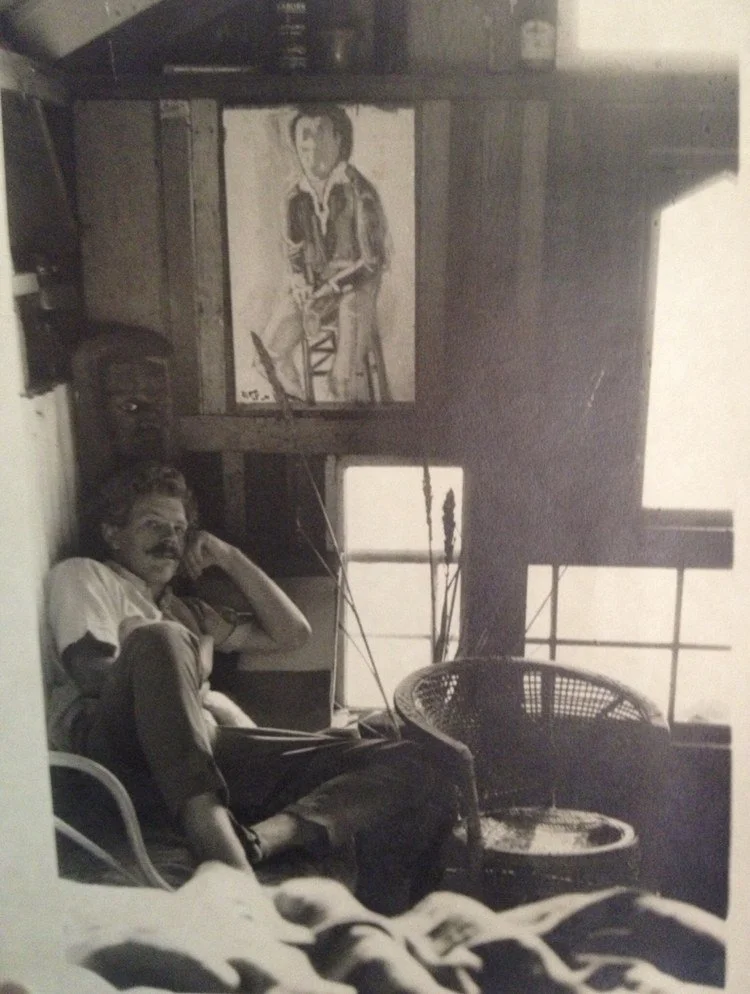
Karl Lee
Once you sat down, time could get away from you.
There would be tea, and Karl chewing on those sticks of ginseng, telling a story that somehow opened into another story. He could talk you into a trance. You would find yourself listening so closely that the mountain, the house, and whatever you had planned for the rest of the day slipped into the background.
A child or two might be running around. The woman sharing his life then, the mother of one of his children, would be there. We would sit and talk and laugh while his stories grew wilder.
Outside, he had built a kiln into the side of the hill. He would go out to stoke the fire, tending another part of his world of heat and transformation.
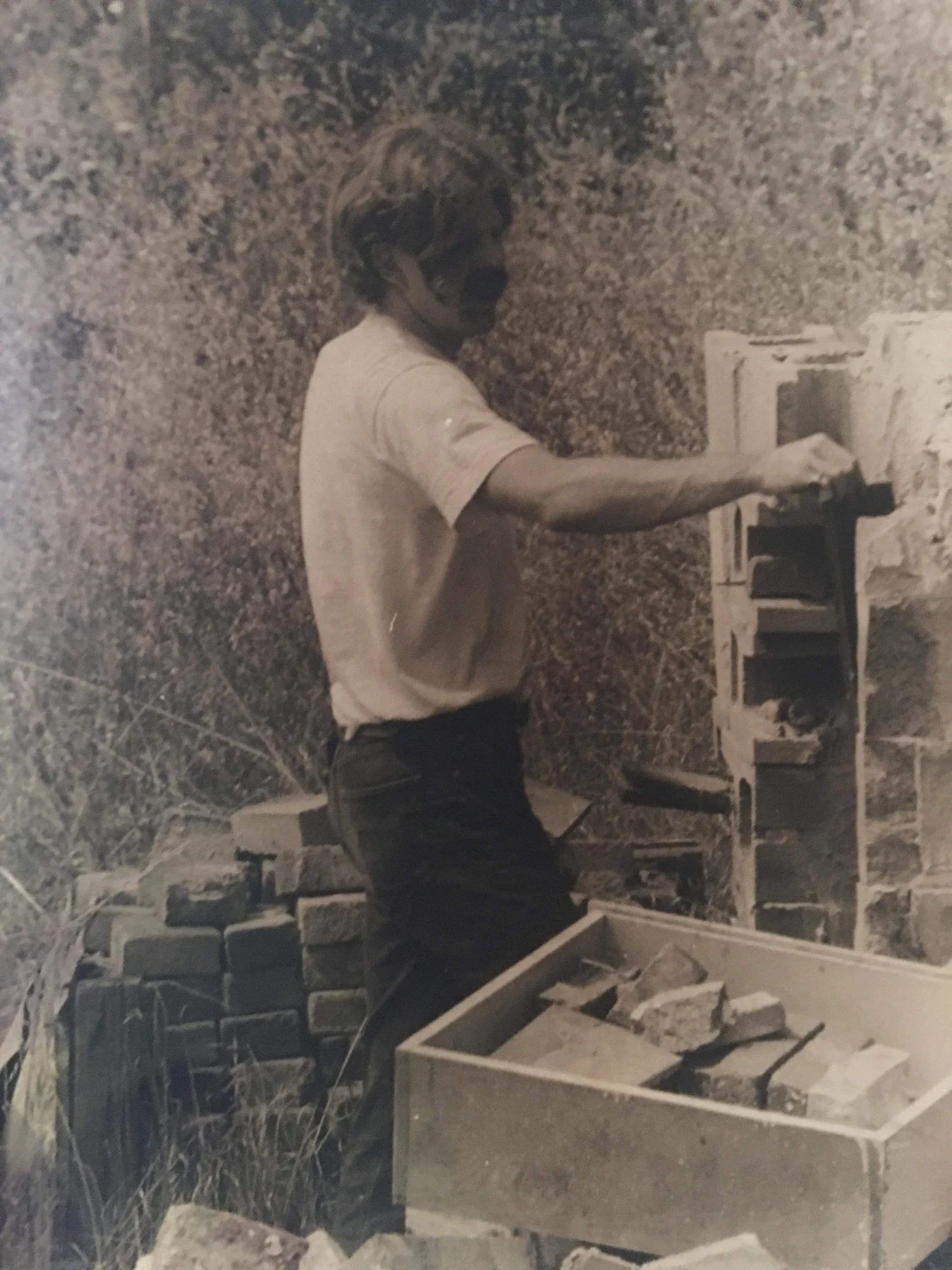
Karl Lee
And sometimes his wildness went well beyond storytelling.
In the middle of a conversation, he might pick up a revolver or shotgun and shoot holes into the ceiling. It was startling, dangerous, and enough to break whatever trance his storytelling had woven.
Are you listening? What did I just say?
There was certainly no drifting off after that.
I remember the laughter, the tea, the beautiful work, and that unpredictable streak all belonging to the same man. Karl was not someone you could tidy into a neat little portrait.
He was an alchemist, and his explanation of magic has stayed with me.
Take oatmeal cookies.
You gather the ingredients. You follow the recipe. You stir everything together, perform your little incantations, and put the dough into the oven at the proper heat for the proper time.
And then?
Oatmeal cookies.
There was your magic.
I loved the plain sense of it. The mystery had a recipe, and you still had to do the work. Gather, measure, stir, tend the fire. Pay attention to what your hands are doing.
He did it with stones and metal. I watched him do it with a roomful of people and a story.
Now that chartreuse tourmaline ring has left my collection for another hand, another adventure. Before I send it along, I find myself back on that untamed path, making my way toward his door.
There is tea waiting, a story already underway, and Karl Lee chewing on a stick of ginseng.
Somewhere on the hillside, a fire is being tended.
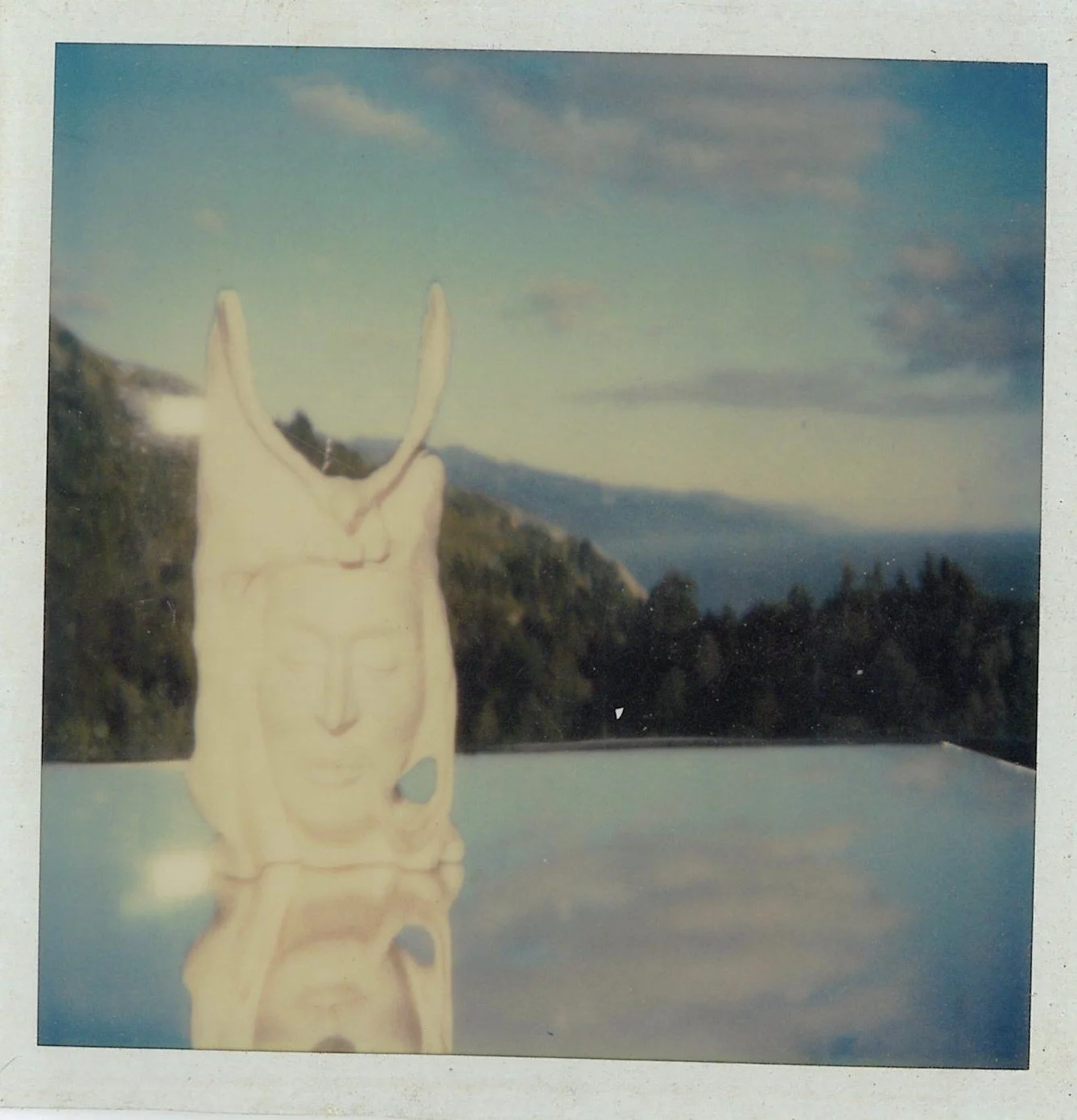
The Big Sur coast
Henry Miller’s First Home on Partington Ridge
I was born in a small cabin on Partington Ridge, high above the Big Sur coast. My father, Karl Lee, moved there from the Esalen Art Barn, where the studio began in 1964. It was home and studio for our family for years. I grew up in it. Karl's bench stood in that cabin. In time, mine stood next to his.
The cabin was one of the first built on the ridge. Keith Evans built it. Evans had been mayor of Carmel. In 1944 Henry Miller came to Big Sur and stayed first with Lynda Sargent, in the log cabin Nepenthe was later built around. After two months she introduced him to Evans, who let him use the Partington Ridge cabin for a small rent while Evans was away in military service. Miller lived there until January 1946, when Evans came home from the war and wanted the house again. It is the same cabin. It still stands.
Miller loved the place. In February 1945 he wrote to his friend Lawrence Durrell: "I have a wonderful cabin, dirt cheap, ten dollars a month." The road up was steep. There was no electricity. The mail came three times a week. Years later, in Big Sur and the Oranges of Hieronymus Bosch, he wrote: "In simplifying our lives, everything acquires a significance hitherto unknown."
Jobst C. Knigge tells the story of those years in Henry Miller in Big Sur, a free PDF I am glad to share. Reading it, I knew the place at once. The fog. The long road up. The quiet.
That quiet is part of why my father made jewelry there. The ridge shaped how we work. Slowly, by hand, one piece at a time, in recycled high karat gold. The studio is in the mountains now, but the ridge is where it started.
Every piece we make is one of a kind. A little of that cabin goes into each one.
Ali Lee
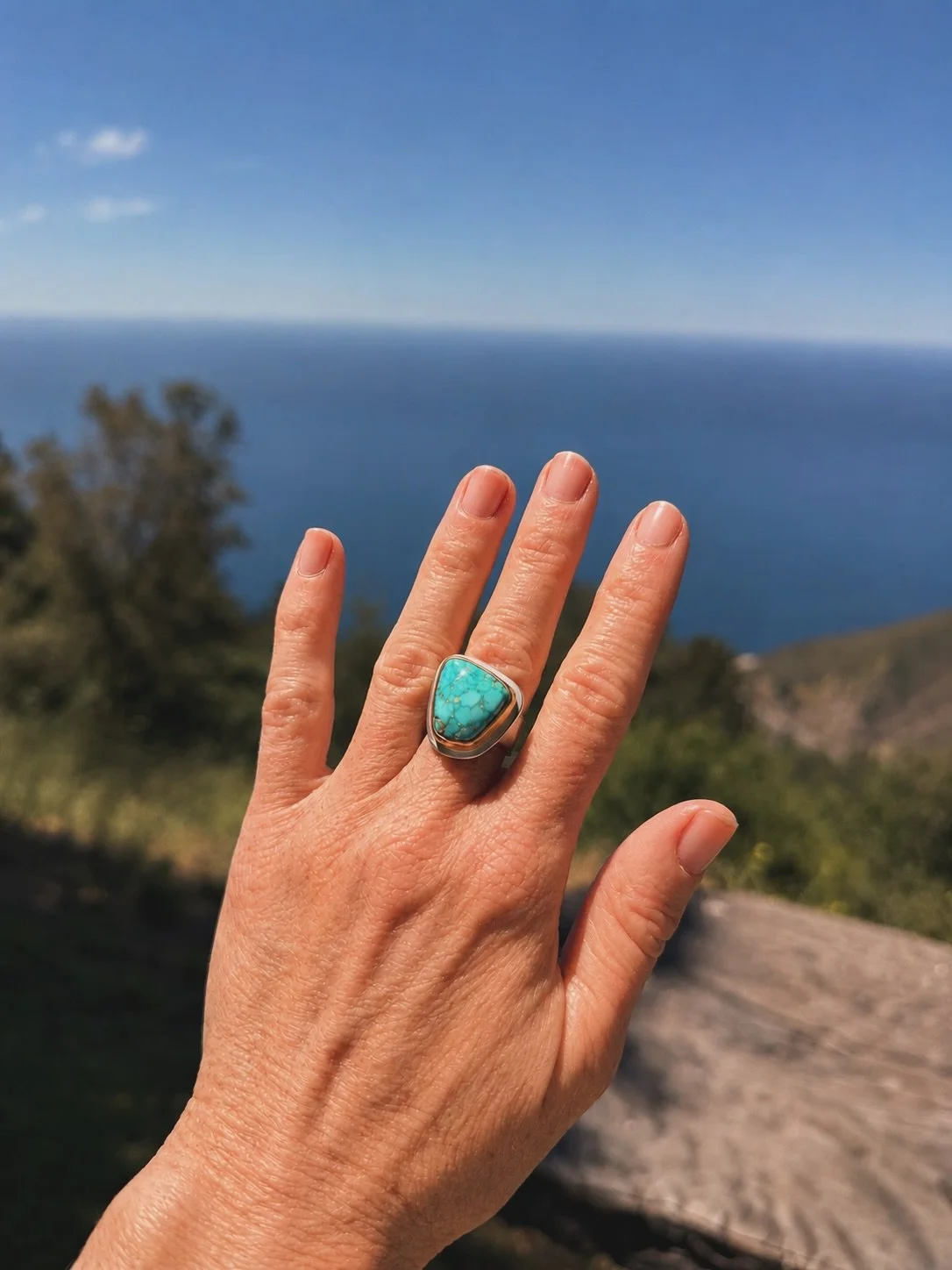
Turquoise Rings, One Stone at a Time
Turquoise is where this studio started. Karl Lee collected it for years, the blue stone out of the Number 8 mine in Nevada most of all, and he built rings around single stones long before it was fashionable to do so.
A turquoise ring made here begins with the stone. Number 8, Pilot Mountain, Sleeping Beauty. No two are alike. The color runs from pale sky to deep blue, and the matrix runs through it like a map of the ground it came out of. We choose the stone first, and the ring is built around it.
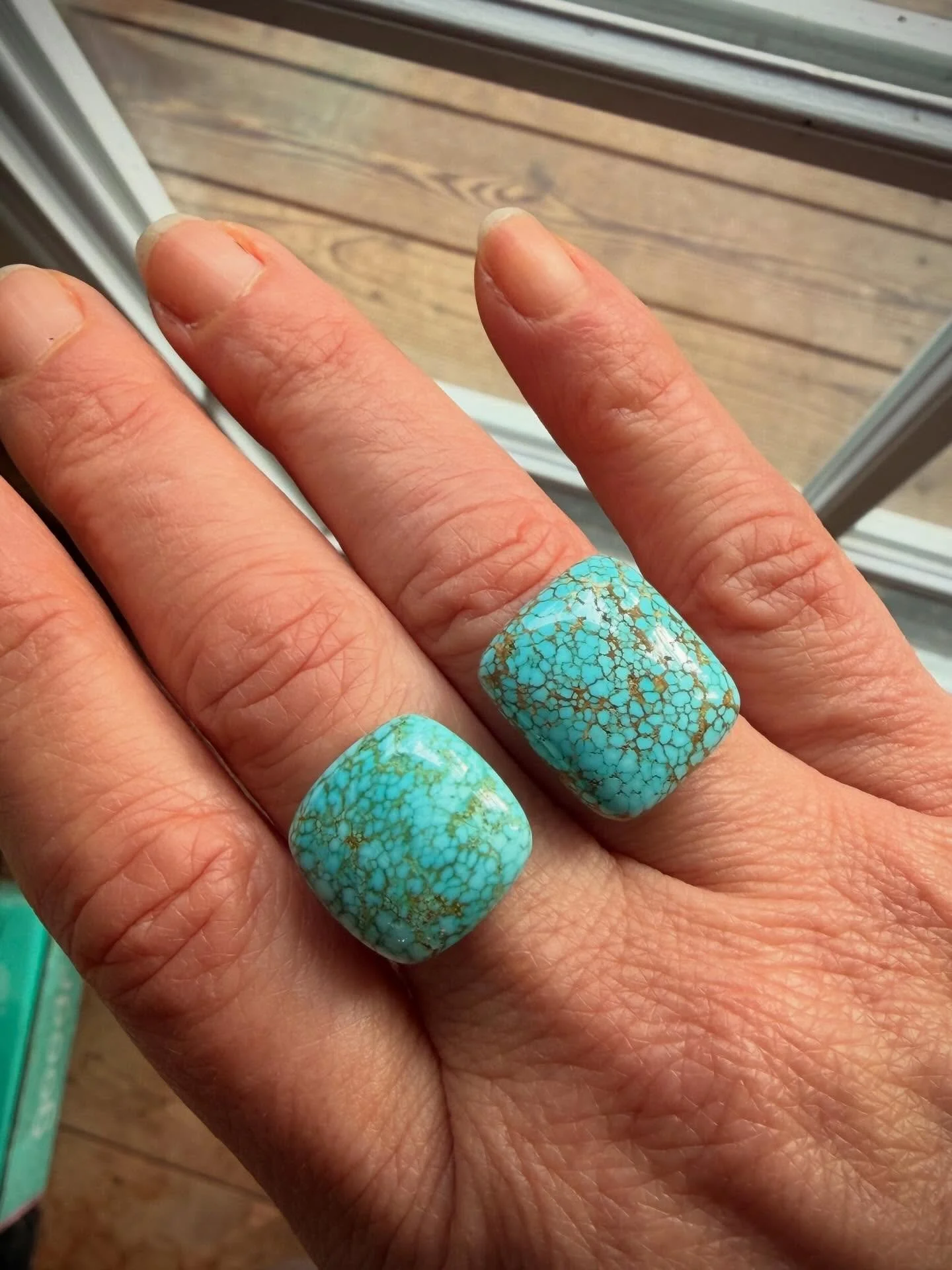
The stone is set in 22k gold, always. In the Big Sur Classic the gold holds the stone above a band of 22k and 18k gold, or 22k and silver. The warm gold against the blue is the whole design. Nothing else is needed.
Karl made these rings on Partington Ridge in Big Sur, and the studio he founded still makes them the same way, one at a time, forged by hand, never cast. Rings built to be worn hard and worn long. When a turquoise ring sells, that ring is gone. Another stone will take its place on the bench, and it will be a different ring.
Turquoise. 22k gold and silver. One of a kind.
If you are looking for a turquoise ring that exists only once, made by a jeweler whose name is on the studio, this is the place. Write to us and we will show you what is on the bench.
Choosing a One of a Kind Engagement Ring
Most engagement rings are cast. Every one of ours is forged.

Every ring at this studio is forged by hand, one at a time, the way Karl Lee started making them in Big Sur in 1964. If you want a ring that does not look like everyone else's, that is the place to start.
Start with the stone. We work from a family collection of stones gathered over sixty years. Turquoise from the Number 8 mine. Australian opals. Sapphires, tourmaline, beryl. An unusual stone carries its own meaning, and the ring gets built around it.
The metal is high karat gold, 22k and 18k, alloyed and milled in our own studio. Forged gold is dense and strong. A ring made this way can be worn every day, sized when it needs to be, and repaired at the same bench that made it. Made to fit the finger like it was always meant to be there.
The Big Sur Classic is the ring many people choose. Karl began the design in the 1970s. It follows the golden mean, and it is harder to make well than it looks. Simple may look easy but it isn't.
If you do not see the right ring on the site, write to us. We take commissions. We also remake old gold and family stones into new pieces, which is some of our favorite work. Tell us the hand it is for and we will help with the size.
A ring like this is not bought the way other rings are bought. It is chosen once, and it stays.
One of a kind. Built to outlast.

Karl Martin Lee painter, potter, sculptor, alchemist, goldsmith
He was eighteen years old. He had twenty dollars and an art set. He stuck out his thumb on a Los Angeles highway and made his way to Esalen of the 1960s. The story of Karl Lee — the goldsmith, potter, painter. Partington Ridge, Big Sur.
Karl Lee Design
He was eighteen years old. He had twenty dollars and an art set. He stuck out his thumb on a Los Angeles highway and didn't look back.
That was the early 1960s. The road took him north along the California coast to Big Sur — a place of fog and rock and ocean that had a way of keeping people. It kept Karl Lee.
He found his way to the Esalen Institute, perched above the Pacific on the cliffs of Big Sur. In those days Esalen was alive with artists, thinkers and makers. Karl made his home in the Art Barn. He painted. He threw pots. He worked with his hands the way some people breathe — because he had to.
When his time at Esalen ended he moved a few miles up the coast road to Partington Ridge. He bought a home there. A writer named Henry Miller had lived in it before him. The ridge looked out over the ocean. The light was extraordinary.
It was here that Karl's hands found gold.
Pottery and painting were his first loves. But there was a family to feed and goldsmithing offered something painting could not — a livelihood. He learned the craft the old way. No casting. No shortcuts. He forged metal with hammers and fire. He developed his signature — sterling silver and 22 karat gold together, the silver making pieces wearable every day, the gold cradling stones in warm bezels that seemed to make them glow from within.
He had an eye for stones. Over decades he built a collection — turquoise from the Number 8 mine in Nevada before it closed forever, opals from Australia, garnets, sapphires, tourmalines sourced from around the world. Rare stones from mines that no longer exist. He kept them all.
Karl used to say his jewelry was made to be worn. Not for occasions. Not for display cases. For life. For chopping wood and carrying water and walking the ridge at dusk. In Big Sur, people still do those things. And for fifty years they did them wearing a Karl Lee ring.
He worked this way for the rest of his life.
After Karl passed, his family discovered something. A sister made contact. She had found something belonging to their late father — a jeweler's handbook. Karl had never known his father. Had never known the craft ran in the blood across generations. But there it was. A jeweler's handbook. Passed down not through teaching but through something older and harder to name.
Karl's son Ali was born on Partington Ridge in 1981 — in the studio itself. He grew up among the tools and the fire. He apprenticed under his father in the 1980s. Today he works that same bench alongside his partner Carrie Armstrong, who leads the studio with Ali.
They alloy their own gold. They hand forge every piece. They do not cast. They do not buy premade findings. They honor the gemstones Karl collected — and when they find a stone they think he would have loved, they can't resist adding it to the collection.
The work continues. On the same bench. In the same spirit. Made to be worn and passed on.
That is what Karl Lee left behind. Not just jewelry. A way of working. A way of living. A tradition that turns out to have been three generations deep all along.
Read what a friend remembers of Karl: Karl Lee and the Recipe for Magic.


